
72 hr
El Nido to Coron: 3-Day 2-Night Island-Hopping Expedition
Bangka-boat adventure through Palawan's wild islands, sleeping in native huts under the stars.
Reserve
Hand-picked by our editors — only the best 5 expeditions from 40 reviewed.
Verified partners for every tour, free cancellation where available, and instant confirmation on every booking.
72 hr
Bangka-boat adventure through Palawan's wild islands, sleeping in native huts under the stars.
Reserve
72 hr
3-day bangka voyage through Palawan's remote Linapacan islands with kubo camping under the stars.
Reserve
72 hr
Sail from El Nido to Coron over 3 days, camping on remote islands with snorkeling and kayaking.
ReservePrices from verified partners. Availability updates in real time at checkout. Free cancellation policies apply where shown.
The landmarks, rooms, and views travelers on this tour remember — all visible on a single visit.
This is the departure pier named by Tao Philippines for the Coron-to-El Nido sailing day. The operator says guests meet here for an early departure, making it the key handoff point before the route heads into West Busuanga waters.
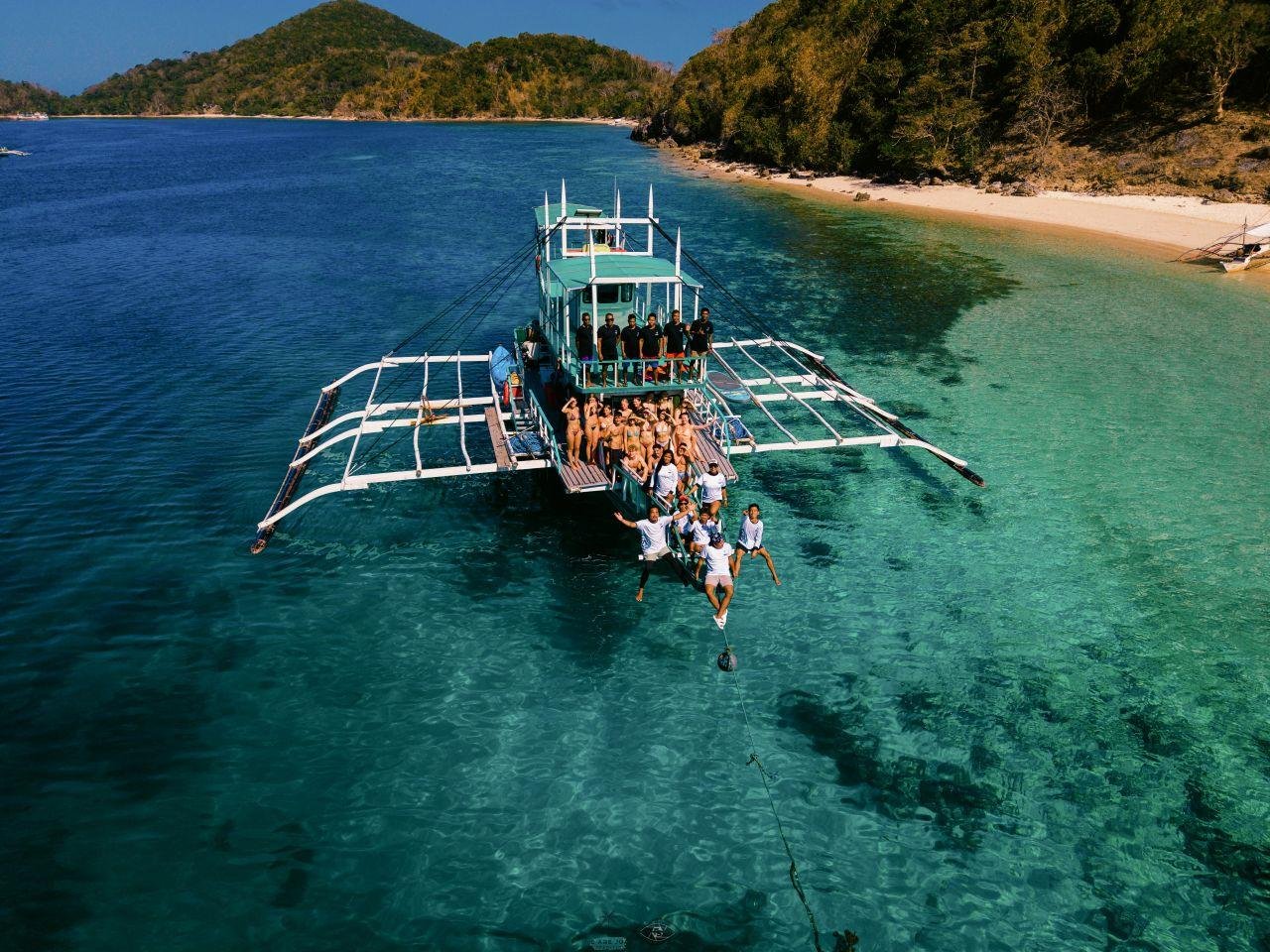
The first sailing leg heads into the remote islands of West Busuanga, a stretch Tao describes as part of its 250 km Palawan route. This section sets the tone for the expedition with open water, reef stops, and low-density island scenery rather than resort-front beaches.
Tao’s route highlights the Linapacan chain as one of the expedition’s core island corridors. The area sits between larger landmasses, so crossings here feel especially remote and are often framed by calm water and hidden coves.
The operator names Daracoton Bay as an overnight and hangout zone on the route. It is a useful waypoint because it combines sheltered water, beach time, and the off-grid camp atmosphere that defines the trip.
Tao Beach Farm is described by the operator as the heart and home of Tao. It appears on the route as an overnight stop and helps explain the expedition’s mix of island hospitality, simple camp living, and community-based hosting.
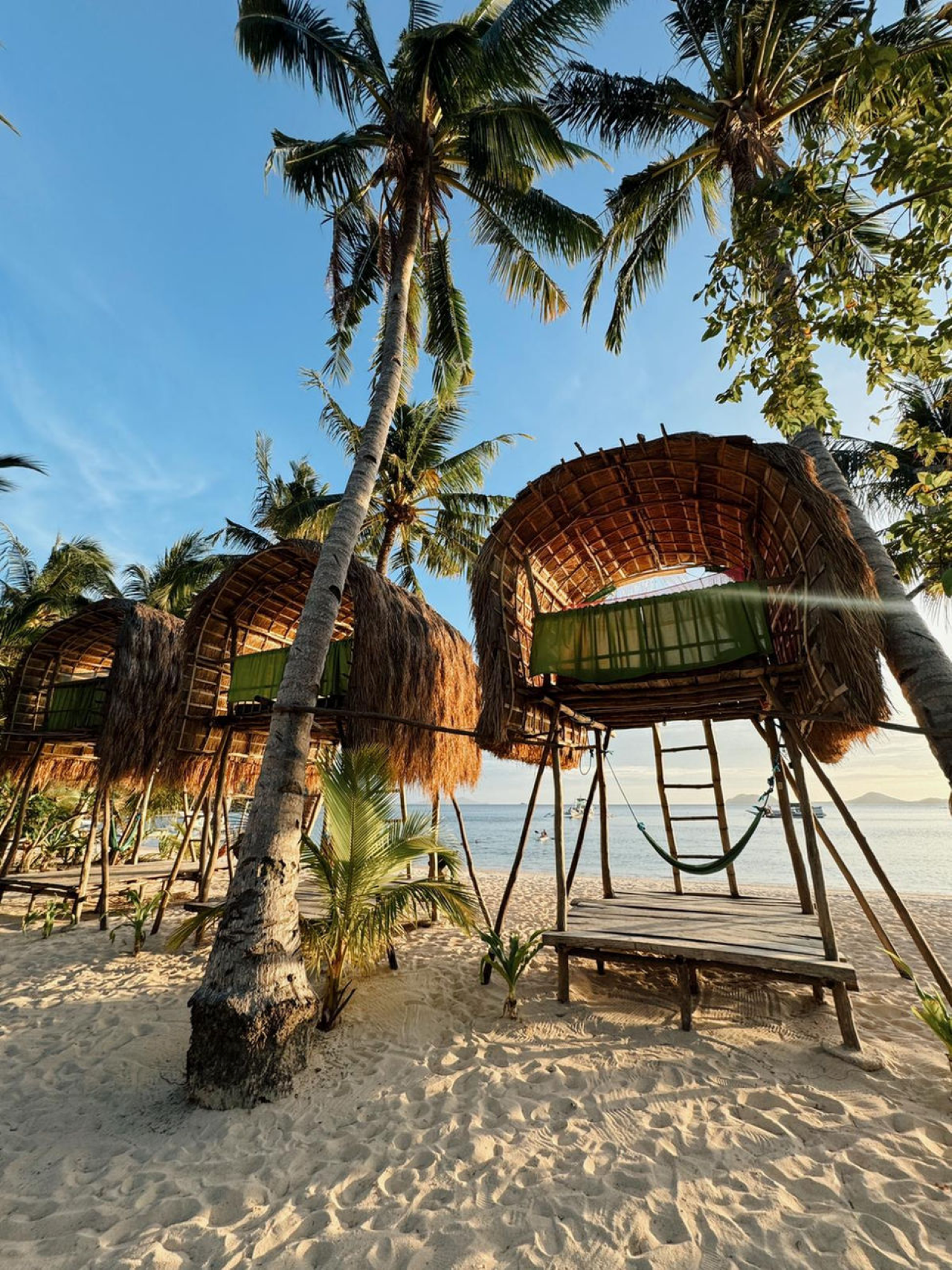
Tuka huts are Tao’s bird-beak bamboo shelters designed for shade, breeze, and connection to nature. The form is tied to the brand’s bamboo architecture and is one of the most distinctive sleep setups on the expedition.
They complement each other, but the better choice depends on where your wider Philippines trip starts and where you want to finish. For most travelers, the coron to el nido expedition is the cleaner fit if you want to end in El Nido after an island crossing; the reverse is better if Coron is your planned finish.
| Feature | Top pick Coron to El Nido | El Nido to Coron |
|---|---|---|
Direction and endpoint |
Coron → El Nido | El Nido → Coron |
Best fit for onward itinerary |
End in El Nido towns | End in Coron flights |
Typical trip flow |
Northbound sea crossing | Southbound sea crossing |
Who should choose it |
Coron-first itineraries | El Nido-first itineraries |
Booking implications |
Book Coron briefing first | Book El Nido briefing first |
| See tickets → |
Verdict: Choose the direction that matches your arrival and departure cities, since both Tao expedition tours run the same core route and the right one is mainly about where you want the trip to start and finish.
Choose your ticket, select your date, and reserve in under two minutes. Secure checkout handled by our verified partner.
Instant confirmation by email, with a mobile voucher you can save offline. No printing, no queuing at a collection desk.
Arrive at the entrance, show your voucher on your phone, and walk in. Most tickets include priority or skip-the-line access.
Practical details for your visit straight from our verified partners — hours, access, rules, and how to get there.
Pack light, quick-dry clothing, swimwear, and a cover-up for sun and boat spray. Tao’s camps use bamboo basecamps and Tuka huts, so sandals or reef shoes work better than heavy shoes on sand, wet decks, and uneven paths.
Use a soft day bag or small duffel that is easy to stow on a boat and in a camp hut. Keep valuables in a waterproof pouch; the route includes open-water crossings, beach landings, and overnight stays in remote camps where storage is basic.
The expedition is boat-heavy and scenic, so a phone in a waterproof case is useful for decks, reefs, and island landings. Drone use, if allowed at all, should be checked with the crew before launch because some stops are near communities and camp areas.
This coron to el nido expedition is not a typical paved attraction: it involves boat transfers, beach landings, and overnight basecamps. Guests should expect uneven sand, steps on boats, and limited accessible facilities at remote stops.
Signal can be patchy or absent across remote islands, so download maps and trip details before departure. Power availability may be limited at camps, so carry a charged power bank and conserve battery for the long sailing days.
Tao offers family vacations in Palawan, but the Coron to El Nido route is a multi-day expedition with long boat legs and off-grid sleeping. Families do better when children are confident swimmers and comfortable with simple camp-style facilities.
Meals are served family-style on sharing plates, with island-fresh ingredients and seafood featured in Tao’s hospitality. Bring drinking water for transitions and avoid relying on on-site shops, since this coron to el nido expedition travels through remote islands and basecamps.
Pets are not a practical fit for this boat-and-camp expedition. The route includes shared boats, overnight huts, and remote beach stops where animal handling and waste management are not set up for pets.
The operator describes the expedition as a 4 days / 4 nights journey through Coron, Linapacan, and El Nido waters, with early departures and a briefing the day before sailing. The route is remote, so a flexible mindset matters more than a packed schedule on the coron to el nido expedition.
Best time to go, insider tips, nearby landmarks, and the cancellation fine print — flip through to skim what matters to you.
Flexible, no hidden fees.
If Tao Philippines cancels the expedition because of severe weather or lack of Coast Guard clearance, the trip is rescheduled within the next two days. If you cancel, a cancellation fee of 60 USD per person applies, and no refund is issued for cancellations made 14 days before departure.
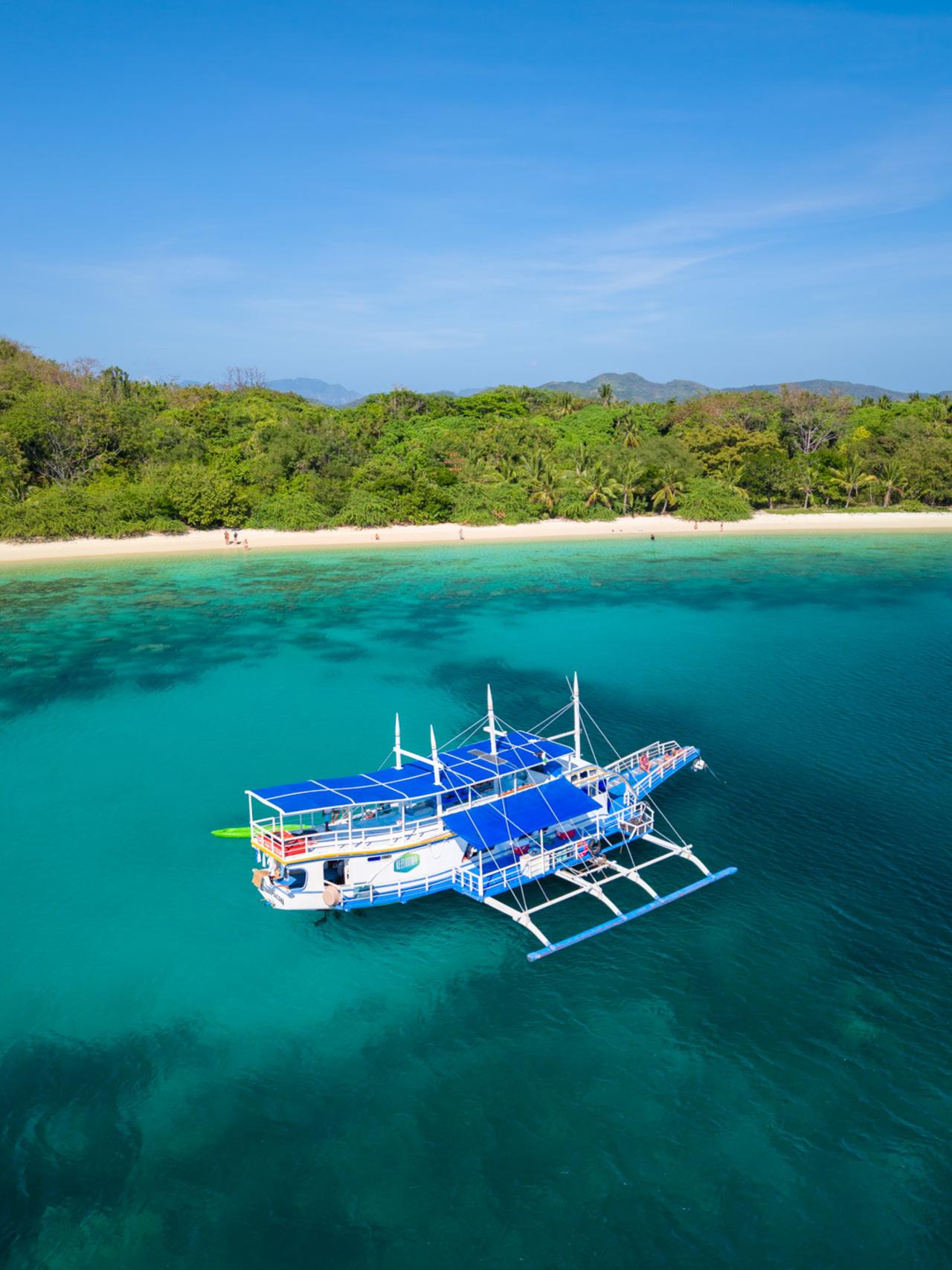
The 160-nautical-mile channel between Coron and El Nido has no scheduled passenger route across its middle. Fast ferries run the outer edge in roughly four hours, bypassing everything between. The islands in that gap — Linapacan, Culion, the Cuyo-facing scatter of limestone stacks — remained largely unmapped for tourism until the late 1990s, when the first multi-day bangka crossings began carrying travellers instead of cargo. The boats themselves are older than the route. The bangka, an outrigger vessel with bamboo arms braced against both flanks, descends from pre-colonial Austronesian design and is still built by hand in the boatyards of Busuanga and Taytay. Hulls are shaped from single-piece marine plywood over hardwood ribs; the outriggers absorb swell that would capsize a narrower keel. A coron to el nido expedition uses these craft not for novelty but because shallow draft is the only way to reach beaches that drop off within twenty metres of shore. Culion, passed on the first morning of most northbound and southbound sailings, held the largest leprosarium in the world from 1906 until the disease was declared eliminated there in 2006. Its Spanish-era church and terraced hospital buildings survive above the harbour. Farther south, Linapacan's waters have been repeatedly cited in oceanographic surveys for exceptional clarity, with visibility regularly exceeding thirty metres over unbleached staghorn and table coral. What gives the crossing its weight today is scarcity of infrastructure rather than abundance of it. Most overnight stops are on islands without grid electricity, without piers, without mobile signal. Camps are set on sand, meals cooked over driftwood, and the whole itinerary reshapes itself around the amihan and habagat wind seasons. Guides read swell rather than schedules. El Nido anchors the southern end within the Bacuit Bay protected area, where karst cliffs rise 300 metres straight from the water and Cadlao, Matinloc and Tapiutan enclose lagoons reachable only at particular tides. Coron anchors the north with Kayangan Lake, Barracuda Lake's thermocline, and eleven Japanese wrecks sunk in the American air raid of 24 September 1944. The route runs both directions with equal frequency, and the northbound version — El Nido to Coron — carries identical stops in reverse order. Palawan island-hopping boat tours of this kind remain limited in capacity by the boats themselves. Any coron to el nido expedition tour therefore books by berth, not by seat, and the archipelago between the two towns stays quiet as a result.
"The islands between Coron and El Nido are defined by what has never been built on them."
A step-by-step walkthrough of the visit — what you'll see, how long each stage takes, and the details that matter.
You gather at the departure point between 07:30 and 08:00, when the briefing runs and dry bags are handed out. Phones go into a waterproof pouch. You board over the outrigger arm, find a spot on the deck matting, and the engine settles into a low four-cylinder knock that will accompany the next three days. The first legs are short. You stop for snorkelling before midday, drop off the bow into water where the bottom sits eight metres down and reads as arm's length. Lunch appears on the deck — grilled fish, rice, calamansi — served while the boat idles in shallows. By late afternoon you reach the night's island. You carry your own bag up the beach, choose a hut or a tent, and rinse under a bucket shower drawn from a hand pump. Day two covers the longest open crossing. You feel the swell change past the headlands. You pause at sandbars that surface only at low tide, and at a village where children paddle out to trade shells. Dinner is cooked over wood; the generator, if there is one, cuts out around 21:00. On the final morning you sail into the karst walls of Bacuit Bay or the lagoons of Coron, depending on direction, and step ashore around midday. Your coron to el nido expedition tickets cover the whole crossing, and the entrance fee here is 0 PHP.
The operator’s published schedule shows Monday through Sunday as closed on the attraction page, so there is no public daily open window to use as a walk-in visit. For booking-specific sailing dates, check the live expedition calendar on Tao Philippines. The best arrival window is 07:30–08:00, which matches the operator’s early departure and briefing timing. That is the right window for the coron to el nido expedition tour because the day starts with boat check-in and departure logistics. The Coron to El Nido expedition is not designed as a step-free attraction. Expect boat boarding, beach landings, sand paths, and remote overnight camps, which make the route difficult for wheelchair users and guests who need continuous paved access. Use a soft bag or small duffel rather than a hard suitcase. Large rigid luggage is a poor fit for boat storage, and the operator’s remote island camps make compact packing the safer choice. Photography is part of the experience, especially on deck, at coves, and during snorkeling stops. Keep devices protected from spray and ask before filming crew areas or local communities. Dress for sun, salt, and wet transfers: quick-dry clothing, swimwear, sandals, and a light cover-up work best. A hat and reef-safe sunscreen are practical for long open-boat segments on the coron to el nido expedition. Tao describes meals as family-style on sharing plates, and food is part of the on-route hospitality. Drink options are limited by the remote setting, so bring your own water bottle and avoid expecting restaurant-style choices. The main departure reference is Coron Pantalan, with the operator’s site noting an early meeting there for the first sailing day. If you are staying in town, plan a short transfer to the pier so you can keep the 07:30–08:00 arrival window. Tao offers family vacation options and private expeditions, but this route is still a multi-day sailing journey with basic camps and long stretches on the water. It suits older children and teens better than very young kids, especially if the family is comfortable with simple facilities. If Tao cancels because of severe weather or Coast Guard clearance issues, the company says it will reschedule within the next two days. For customer cancellations, the published policy charges 60 USD per person and no refund is given for cancellations made 14 days before departure. El Nido and Coron both work well as add-on bases, and Tao’s own pages mention Coron Pantalan, Linapacan, Daracoton Bay, and Tao Beach Farm as part of the wider route. If you want to extend your coron to el nido expedition, those areas align best with the operator’s sailing geography.
Please contact us for more information.