
72 hr
El Nido to Coron: 3-Day 2-Night Island-Hopping Expedition
Sail by traditional Bangka from El Nido to Coron, camping on remote islands along the way.
Reserve
Hand-picked by our editors — only the best 5 expeditions from 180 reviewed.
Verified partners for every tour, free cancellation where available, and instant confirmation on every booking.
72 hr
Sail by traditional Bangka from El Nido to Coron, camping on remote islands along the way.
Reserve
72 hr
3 days sailing Palawan's wild outer islands by traditional bangka, with beach camps under the stars.
Reserve
72 hr
Sail between Coron and El Nido, hopping up to 15 islands with beach camping, meals and snorkeling included.
ReservePrices from verified partners. Availability updates in real time at checkout. Free cancellation policies apply where shown.
The landmarks, rooms, and views travelers on this tour remember — all visible on a single visit.
This inland lagoon is one of the best-known stops associated with the Coron side of the route. It is famous for clear water, limestone walls, and a short hike approach that turns the arrival into a viewpoint stop before swimming. The location is widely tied to the Tagbanwa-managed island area and is often treated as the signature freshwater highlight of the journey.
This stop blends warm water, sheltered shoreline, and a quieter island setting than the more famous lagoons. It is a useful contrast point on the route because the water experience changes from open-sea sailing to a sheltered soak stop.
A shallow WWII-era wreck makes this one of the route’s strongest snorkeling landmarks. The wreck sits close enough to the surface that marine life and coral growth are visible without deep-diving gear, which is why it is often included in island-expedition itineraries.
This is a sand-and-sea stop that works as a classic Palawan beach interlude. The island is known for relaxed shore time, turquoise water, and a simple layout that suits lunch breaks and swimming between longer sailing legs.
North Cay adds a smaller-island feel to the route and is often grouped with nearby sandbars and beach pauses. Its appeal is the compact scale: fewer built structures, more open shoreline, and a cleaner horizon line for coastal photography.
This wildlife stop is notable because dugongs are not guaranteed, which makes any sighting feel special without overpromising. The area adds a marine-ecology angle to the expedition and gives the route more than just beaches and lagoons.
They complement each other, but the el nido to coron expedition 3d2n is the better choice if you want to finish in Coron, while the reverse route works better for a Coron-first trip. Most travelers pick the direction that matches their flight or ferry plan, since the scenery and island-hopping style are essentially the same.
| Feature | Top pick El Nido to Coron | Coron to El Nido |
|---|---|---|
Route direction |
El Nido → Coron | Coron → El Nido |
End point |
Coron | El Nido |
Trip flow |
Starts in El Nido, ends in Coron | Starts in Coron, ends in El Nido |
Best for |
El Nido-first itineraries | Coron-first itineraries |
Connection planning |
Best if departing Coron after tour | Best if arriving El Nido after tour |
Island route |
Palawan islands eastbound | Palawan islands westbound |
Tour length |
3 days, 2 nights | 3 days, 2 nights |
| See tickets → |
Verdict: If your onward plans end in Coron, choose the el nido to coron expedition 3d2n; if your trip begins in Coron, the reverse direction is the cleaner fit.
Choose your ticket, select your date, and reserve in under two minutes. Secure checkout handled by our verified partner.
Instant confirmation by email, with a mobile voucher you can save offline. No printing, no queuing at a collection desk.
Arrive at the entrance, show your voucher on your phone, and walk in. Most tickets include priority or skip-the-line access.
Practical details for your visit straight from our verified partners — hours, access, rules, and how to get there.
Pack swimwear, lightweight clothing, and reef shoes for shore landings and snorkeling stops. A beach hat and sunglasses are useful because the route is fully outdoor and exposed to sun and spray.
Bring a small day bag for essentials, because larger luggage may be difficult to access during the expedition. The operator says boats carry life vests and safety gear, and baggage access is limited once you are underway.
Photos are welcome at the beaches, shipwreck, lagoons, and snorkeling stops, but protect cameras and phones from salt spray. A dry bag is the safest way to carry electronics between landings.
This is a boat expedition with beach landings, so it is not suitable for travelers who need step-free access. The route includes snorkeling, cliff-jump-style activities, and moving between islands, which can be difficult with mobility limitations.
Cell service is limited in many areas, and charging is only available during the expedition’s power window. Expect to charge devices between 6 AM and 11 PM where camp electricity is available.
The operator notes the expedition is not mixed with children, so it is better suited to adult travelers. Families should also plan for island camping, limited electricity, and no constant internet during the trip.
Meals are included onboard, and the operator also mentions drinks on board. Bring your own water bottle and cash for any personal extras or required fees on arrival.
Pets are not a practical fit for this multi-day boat route, especially with shared cabins, remote islands, and snorkeling stops. No pet-friendly policy is advertised on the official trip pages.
The expedition follows flexible routing based on sea conditions, so the exact sequence of stops can change. The operator also notes that travelers should have their own travel insurance before joining.
Best time to go, insider tips, nearby landmarks, and the cancellation fine print — flip through to skim what matters to you.
Flexible, no hidden fees.
More than 30 days before departure: full refund. Between 14 and 30 days before departure: refund minus a 2,000 PHP fee, or transfer the booking to another person at no additional cost. Less than 14 days before departure: no refund, but a name change is allowed if requested in writing before the expedition.
Ten Japanese ships went down in Coron Bay on 24 September 1944, sunk in a single morning by carrier aircraft from the United States Third Fleet. Most still lie in twelve to forty metres of water, hulls furred with coral and soft sponge. That wreckage marks one end of the sea corridor an El Nido to Coron Expedition 3D2N tour follows. The other end is Bacuit Bay, where limestone towers rise straight out of the water without a beach between. Between the two lies Linapacan Strait, a scatter of islands so thinly settled that many carry no name on the nautical chart. The limestone is Permian, laid down as reef roughly 250 million years ago and lifted since into the karst pinnacles of Cadlao, Matinloc and Tapiutan. Rain has cut its edges sharp enough to draw blood. Swiftlets nest in the shafts, and those nests gave the northern town its Spanish name: El Nido, the nest, after birds whose saliva-bound cups were traded to Chinese merchants for centuries. Formal protection came in 1991, when Presidential Proclamation No. 32 created the El Nido Marine Reserve. A 1998 expansion enlarged it to roughly 90,000 hectares of managed resource protected area covering Bacuit Bay and the Taytay coast. North of that boundary, much of the water belongs legally to people rather than to the state. The Calamian Tagbanua won ancestral domain title over Coron Island and its surrounding sea in 1998, among the first such claims in the Philippines to cover marine territory, and they still administer Kayangan Lake and the layered fresh and salt water of Barracuda Lake. Culion, on the western approach, held the largest leprosarium in the world after 1906; it became an ordinary municipality only in 1992 and was declared free of the disease in 2006. The Cuyonon and Tagbanua boat builders of these islands worked the same channels long before charts recorded them. Little of that history is legible from a bangka deck. What is legible is a working sea: outrigger hulls under repair, bamboo fish traps, villages of a dozen roofs on islands with no grid electricity. El Nido to Coron Expedition 3D2N tickets are, in practice, a berth on a wooden boat rather than an entry pass to a monument. The three-day Palawan boat expedition survives because no road crosses this water and no bridge ever will; the Linapacan crossing has been made by outrigger far longer than it has been sold as an island-hopping tour. Its value lies less in what it delivers than in what it withholds — asphalt, signal, schedule, the sound of anything but a single-cylinder diesel and the hull.
"No road crosses this water and no bridge ever will; the passage has always been made by outrigger."
A step-by-step walkthrough of the visit — what you'll see, how long each stage takes, and the details that matter.
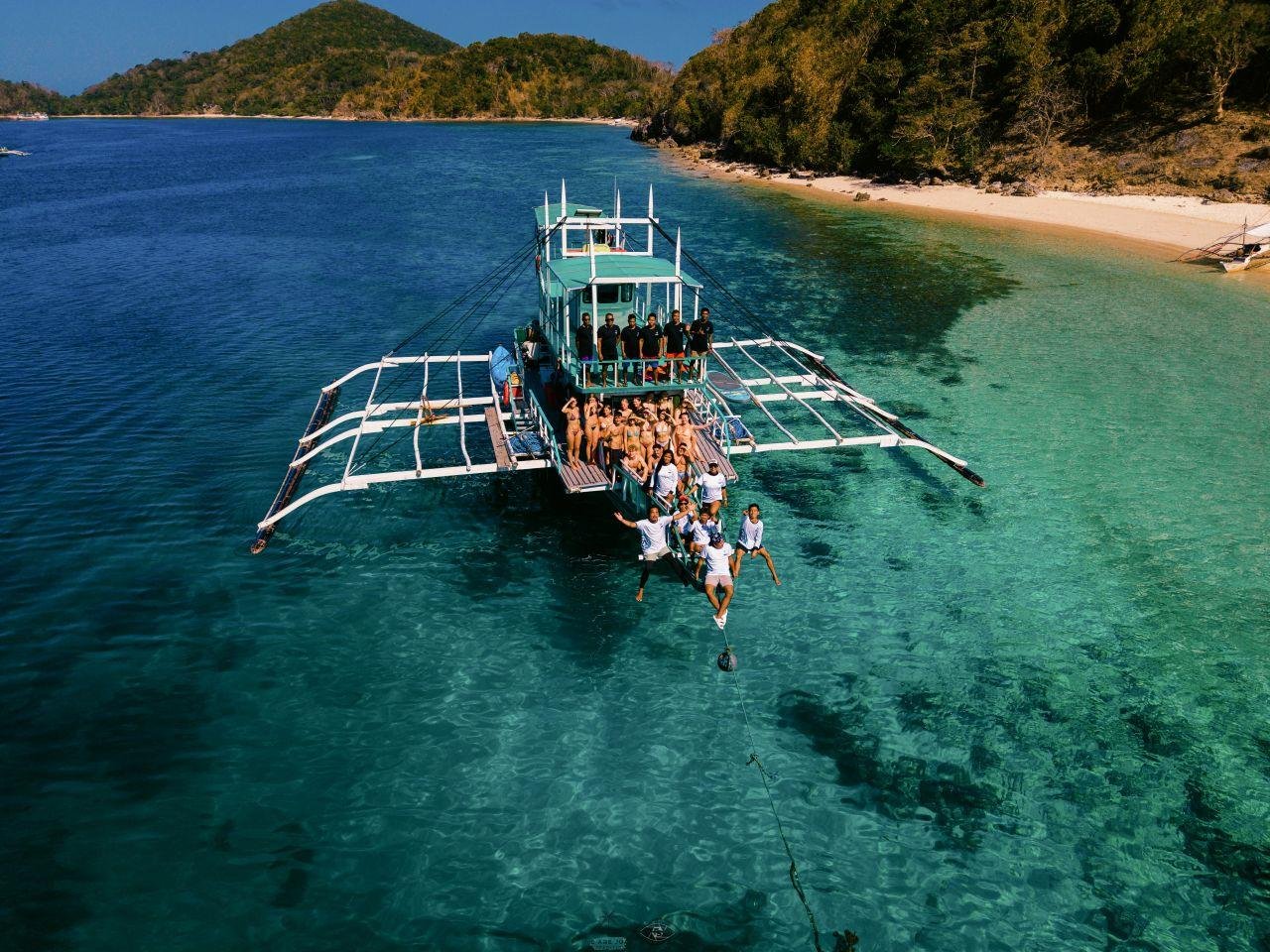
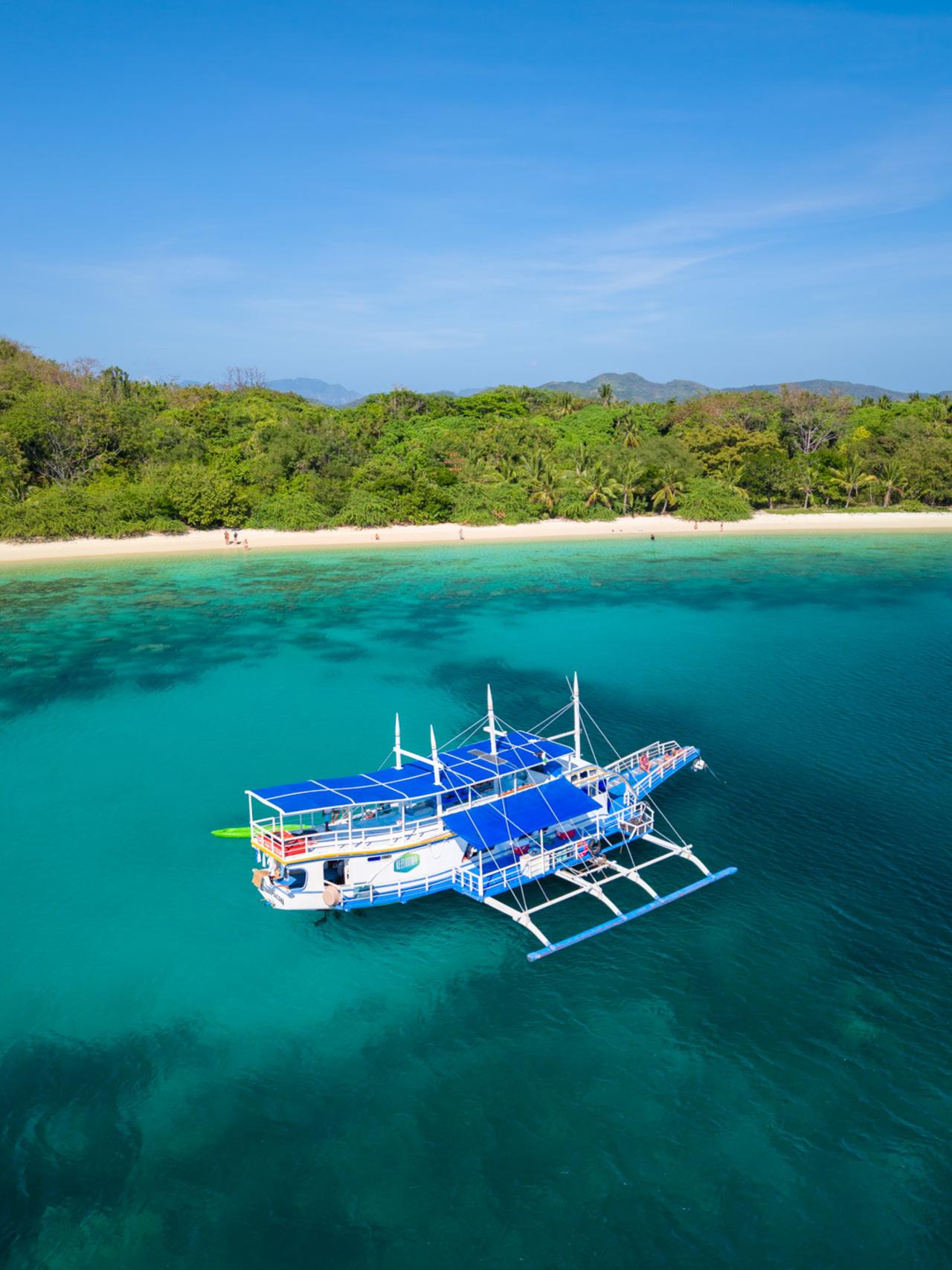
You board from the beach, not a pier: shoes in hand, water at the knee, a crewman lifting your dry bag over the outrigger arm while the engine idles. You find a spot on the bamboo deck, and within twenty minutes Cadlao has slid astern and the karst thins into open sea. The diesel is loud enough that conversation stops; you watch instead. The boatman cuts it somewhere off Linapacan, and you go over the side with a mask into water where the bottom reads as detail rather than colour — staghorn, giant clam, the pale scar of an anchor drag. Lunch comes off a grill bolted to the stern: tuna, aubergine, rice in banana leaf, mango eaten over the rail. By late afternoon you are ashore on a beach with no road to it. You rinse under a plastic scoop and a drum of well water. Sleeping is a nipa hut with a mosquito net or a tent pitched above the tideline; there is no switch to flip, and the generator, if there is one, goes quiet early. Phones stop being useful somewhere past the second island, which most people on El Nido to Coron Expedition 3D2N tours describe afterwards as the point the trip started. You wake to coffee in a tin mug and the crew already bailing. The last stretch runs past Black Island and the Calamianes, where the limestone darkens and the water turns green over deeper ground. You step off at Coron salt-stiff, carrying a dry bag that has failed at least once.
The route is listed as open daily, 00:00–23:59, but the actual departure time varies by booking. The official contact page lists daily working hours of 8 AM to 8 PM Coron time for inquiries. There is no fixed public arrival time because departure varies by booking. The official route page says the expedition start time depends on the reservation, so travelers should follow their confirmation details. Cancellations more than 30 days before departure receive a full refund. Between 14 and 30 days before departure, the refund is reduced by a 2,000 PHP fee, while less than 14 days before departure is non-refundable. Bring a small essentials bag, because larger luggage can be hard to access during the trip. The operator recommends using a smaller bag for the three-day expedition and keeping valuables in a dry bag. Yes, photography is allowed at the beaches, snorkeling stops, shipwrecks, and camp settings. Salt spray is the main risk, so a waterproof case or dry bag is useful for phones and cameras. The best booking window is usually driven by sea conditions and your wider Palawan schedule rather than a fixed seasonal closure. The operator can alter the route or departure timing if weather or coast guard conditions require it. Wear swimwear, lightweight clothing, flip-flops or reef shoes, and sun protection. The route includes beach landings and water activities, so fast-drying clothes work best. Meals are included during the expedition, and the official pages also mention drinks onboard. You should still carry cash for any arrival fees and personal items. This route is not ideal for very young children because the operator states groups are not mixed with children. Multi-day boat travel, camping, and limited electricity make it better for adults and older teens. If weather blocks departure, the operator says it will try to reschedule within the next three days. If you do not accept the new date, part of the reservation or deposit can become non-refundable under the posted weather policy.
Please contact us for more information.